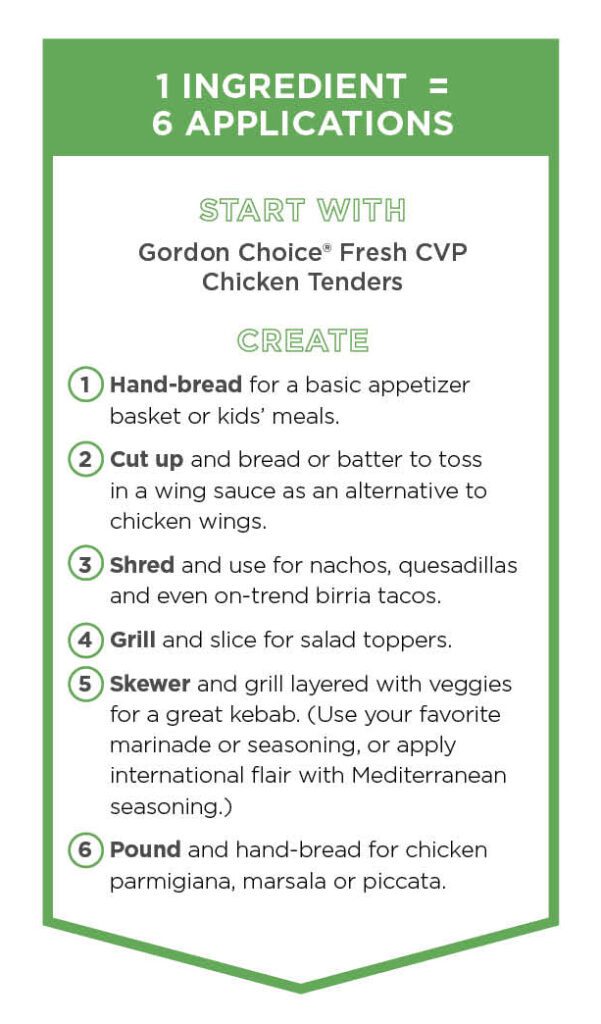
This article originally appeared in the Gordon Food Service Foodscape publication.
Amid all the challenges facing restaurant operators, menu innovation remains a key ingredient to success. It’s a matter of doing more with less.
For restaurants, a downsized labor force has downsized menus. Supply-chain struggles have manufacturers in a bind, often unable to develop new products as they try to keep core products in the pipeline. Then there’s inflation.
What’s an operator to do? Get back to basics—focus on ingredients that define the restaurant’s brand. It requires a lens of product cross-utilization, menu smarts and operational efficiency, according to Gordon Food Service experts.
Balancing innovation
Customers are dining out more and have increasing expectations. Buying a different cut of beef for each dish is a tall order. With a smaller kitchen staff and inconsistent product availability, you’re inviting stress, says Culinary Specialist Adam Walkover. He recommends a hard look at cross-utilization.
Consider the value and convenience of pre-cooked short ribs. It’s a star in the center of the plate, but it’s right at home elsewhere:
- Add seasonings and use it for tacos.
- Shred it into a nacho plate.
- Stir it into a ragout and serve over pasta.
- Cut it into chunks, deep-fry and create a barbecue burnt ends appetizer.
- Put it on a biscuit with a fried egg as a brunch item.
“Instead of buying three or four items to make a dozen things on the menu, I’m buying one or two ingredients and combining them with ingredients I keep in inventory,” Walkover said.
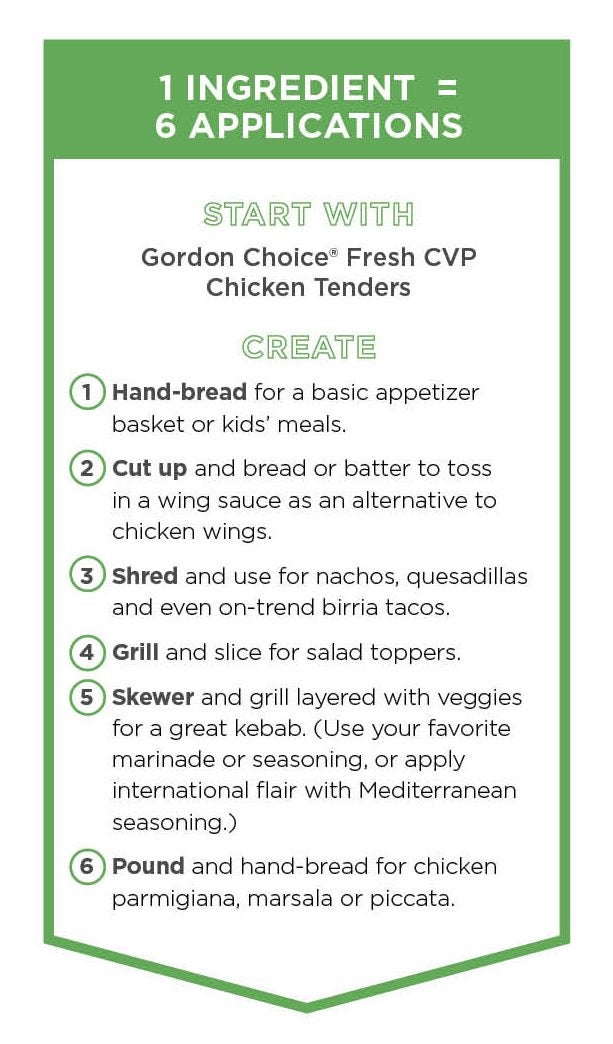
Cover all bases
Innovative cross-utilization doesn’t stop with proteins. Simple mixtures can create signature flavors, Customer Marketing Manager Art Tigera explains. Add blackening spice to ranch dressing for a blackened ranch condiment. Combine ranch dressing and hot sauce for a buffalo ranch dip.“These can take your appetizers up a notch without adding new products.”
Don’t overlook the bar, says Culinary Specialist Bill Pilgrim. A can of wild cherry topping mixed with a little bourbon makes a wonderful sauce for a chocolate torte. Those same cherries can be used to create a shrub for a non-alcoholic offering or for your signature Old-Fashioned. Add a bit of olive oil and vinegar to create a cherry vinaigrette for a marinade or salad dressing.
Speed-scratch also is a player. Pilgrim suggests these ideas:
- Signature salsa. Start with fire-roasted salsa verde, then blend cilantro, jalapeños, green onions and fresh lime juice.
- Trendy elote. Start with RoastWorks corn and jalapeño blend, combine with mayo, butter, top with crema and a sprig of cilantro.
- Seafood sauce. Start with lobster bisque, add cream and egg yolks, then whip until creamy and serve as lobster veloute.
Price for profitability
A big mistake operators make is overlooking how plate costs affect profits. With rising food and labor costs, simply increasing menu prices may not protect profit margins.
“You can’t make money unless you know where you’re losing money,” Tigera said. “Before you go through menu innovations, you really have to understand where your costs are.”
One way to start is by analyzing the 10 or 15 top-selling menu items, Walkover suggests. Price adjustments on those items will impact the bottom line the fastest. After the first 15 items, cost out five more each week to cover the entire menu. Recipe Manager and Gordon Restaurant Pro can help make sense of the numbers.
Innovative dishes run through a pricing formula alone won’t always deliver the most profit. Pilgrim recommends putting the dish in front of your team and asking what they would pay.
“They might tell you it’s a $19 dish in your market, where the food-cost formula might price it at $11 or $12,” Pilgrim said. “Using the perceived value can capture more profit on an item that’s pretty easy to make.”