
National restaurant chains invest handsomely in marketing. They build powerful websites and intuitive mobile apps, and have large followings on social media. They spend massive amounts of money to create visibility, engagement, and brand awareness. National chains spend big on restaurant marketing both because it works and because they can afford it.
Restaurant marketing is a little different for independent operators. Small restaurants spend so much of their budget on baseline expenses like food, labor, and space that marketing often ends up on the back burner, slowly boiling down to nothing.
But a solid restaurant marketing strategy is absolutely essential to survival in a competitive marketplace. So how can you be sure that your marketing dollars are actually making an impact?
Invest in Your Operation
“It starts with the right mindset about what marketing for your restaurant can mean,” Back of House Head of Marketing Hilary Young explains. “You need to think about it as an investment in the future of your business. When you nail your marketing, you’ll see a return on the investment that results in traffic and sales.”
Still, the goal of this article isn’t to tell you exactly how much you should spend on your restaurant marketing strategy. (Back of House has a helpful tipsheet to help create a restaurant marketing budget.) The goal of this article is to highlight the things you absolutely must do to market your restaurant, regardless of your budget.

5 Things Your Restaurant Must Do To Market Effectively
“Some independent operators make the mistake of thinking they can’t afford to invest fully in their marketing efforts,” Back of House Operations Expert Dan Durkin observes. “But the reality is that you can’t afford not to invest in certain basic marketing essentials.”
Whether you work for a national chain or you own an independent business, marketing your restaurant depends on doing the following things, and doing them well.
1. Build a Great Website
Your website is the first thing a lot of your customers will see. Make a good impression. Your website should look clean, professional, and consistent with your brand image. Your food photographs should be crisp, appetizing, and high resolution.
“Your website needs to capture the same feeling you want people to have when they walk through the front door of your restaurant,” Hilary explains. “And of course, it should also be functional and easy to use. After all, what good is a pretty website if no one can figure out how to find what they need on it?”
That means your website should be:
- Search engine optimized (SEO) so your customers can find you online
- Easy to navigate so visitors can find exactly what they’re looking for (your menu, your hours, an “order now” button) without a hassle
- Frequently updated with current information so customers don’t show up asking for a special that you took off the menu six months ago
- Seamlessly coordinated with your online ordering and reservation systems so everything runs smoothly
- Optimized for mobile so your customers can easily browse your menu and order food using their smartphones
“Your website should be easy to find, easy to use, and easy on the eyes,” Dan adds. ”If that’s not something you can do in-house, think about working with an experienced website builder. I usually recommend something like ChowNow or Owner for independent operators.”
2. Use Social Media to Its Fullest Potential
Social media is another cornerstone of digital marketing for restaurants. An active social media presence is an absolutely mandatory part of an effective restaurant marketing strategy today.
According to a recent survey from Deloitte, 90% of operators view social media as “very or extremely important” to digital marketing for restaurants. It’s easy to understand why. In 2024, surveyed operators saw a 9.9% increase in consumer-driven revenue “as a direct result of their social media strategy.”
“Your restaurant needs to be visible on social media channels like Instagram, TikTok and even Facebook, because that’s where your customers are,” Hilary explains. “If you really want to connect and engage with your community, you need to be active, responsive, and consistently posting fresh, interesting content.”
Producing all of that content takes time, energy, and creativity. It helps to have a social media manager on staff. But other support services and tools can help.
Some of our favorite social media management vendors include SocialPilot and SproutSocial. You might also want to try our totally free, fresh-out-of-the-box social media post generator, where you can upload your own photos and get unique, instantly generated, post-ready captions for your pics.
3. Build Your Contact List
We may have access to all kinds of advanced technology, but there are still few strategies that work better than direct digital marketing for restaurants. Emails and SMS texts get results, plain and simple.
An article from ChowNow says the email open-rate for restaurants is a healthy 20-30% and that those who open are often the most engaged customers. ChowNow also points out that 90% of the time, your text recipients will read your message within 3 minutes.
That’s a pretty amazing return on a relatively modest investment. Restaurants today have access to affordable services that can help craft and automate these direct digital marketing campaigns. Vendors like Missive and Seated can also help turn your customer data into targeted and personalized outreach.
“The big takeaway here is that customer contact information is easily one of your most valuable assets,” Dan tells us. “There are different benefits to using each of these channels but you need to have both email and texting in your marketing mix. These are low-cost, high-reward forms of outreach that definitely work.”
4. Manage Your Reputation
“Obviously your restaurant’s online visibility is important, but it’s also important for this visibility to create a positive impression,” says Dan. “Negative online reviews can really damage your reputation.”
High ratings can be a boon for your business. Negative customer feedback can be crushing. According to ChowNow, 84% of consumers value online reviews just as much as personal recommendations. There’s a lot riding on your restaurant’s rating on sites like Google, Tripadvisor, and Yelp, so it’s important to stay on top of your reviews. But it can be a lot to keep track of.
This is why a lot of restaurants work with reputation management vendors. A reputation manager can help you:
- Track your online reviews
- Thank customers for positive feedback
- Encourage happy customers to leave reviews
- Respond quickly and effectively to negative reviews
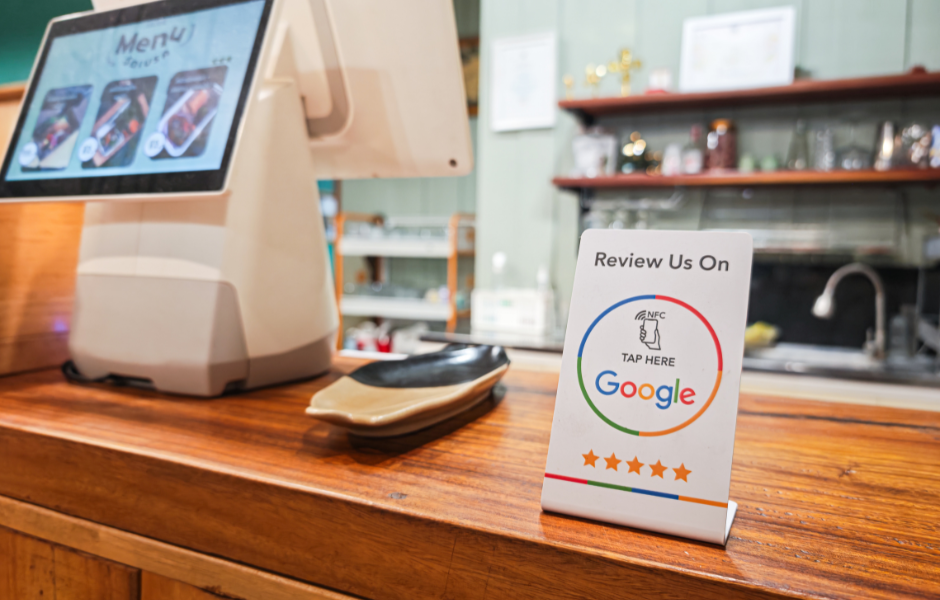
Reputation management vendors like Benbria and Libro can track all online mentions of your restaurant, help generate positive reviews, and even provide automated responses to your customers. Paytronix can do the same but is generally best for multi-unit operations.
You can also use all the valuable data and feedback you’ll gather through your reputation management platform to improve the customer experience, strengthen loyalty, and drive more repeat
5. Get Involved With Your Community
“Obviously, a lot of your marketing efforts are going to be online these days,” Hilary points out. “But there’s also real value in having actual real-life interactions in your local community. If you’re an independent restaurant, your presence in your neighborhood is about a lot more than just serving food.”
Local restaurants also serve a natural role in their communities — places where friends and family gather, where staff members know their customers, where regulars come for their favorite dish. Connecting with your community is a great way to cultivate that local neighborhood feel in and around your restaurant. There are a lot of ways to get involved, such as:
- Partnering with local schools, sports teams, and non-profits
- Hosting community events
- Sponsoring food drives
“Getting involved in the community is a great way to put your brand out there, and to bring the community into your space,” Hilary points out. “But in order for this type of community engagement to work as a marketing effort, it has to be genuine. The more time you spend in the community, the easier it should be to know how to show up authentically and in a way that resonates with people.”
Putting All The Marketing Pieces Together
Your community-based initiatives may be happening out there in the real world, but you still have to post about them on social media. After all, digital marketing is still your best bet for bringing awareness to your restaurant and the causes you care about.
In fact, that’s why all of the priorities above are essential to your restaurant marketing strategy. You need all of these pieces to work together in order for your marketing strategy to work. Fortunately, there are all kinds of tools, tech, and services that can help you pull it all together.
If you’re looking for a cost-effective place to start, check out our totally free, brand-new social media post generator and get a helping hand as you create those all-important social media posts. For all the rest, reach out today and schedule your personalized, one-on-one consultation with one of our in-house restaurant tech experts.
About Back of House
Back of House helps restaurant operators discover, evaluate, and implement technology solutions that improve operations and profitability. Through expert resources, industry insights, and technology guidance, Back of House connects restaurants with the tools they need to build smarter, more efficient businesses.