
Understanding the Science-Based Framework for Federal Food Policy
The Dietary Guidelines for Americans are the foundation of federal nutrition policy. The guidelines are updated every five years to reflect the latest scientific evidence on diet and health. The development of the guidelines is a multi-agency process, which is led by the U.S. Department of Agriculture (USDA) and the Department of Health and Human Services (HHS). The latest Guidelines for 2025-2030 was released on January 7, 2026.
New Changes for 2025-2030
The overarching message of the new guidance is a focus on real foods. In conjunction, an inverted Food Pyramid has been re-introduced that prioritizes protein, healthy fats and produce.
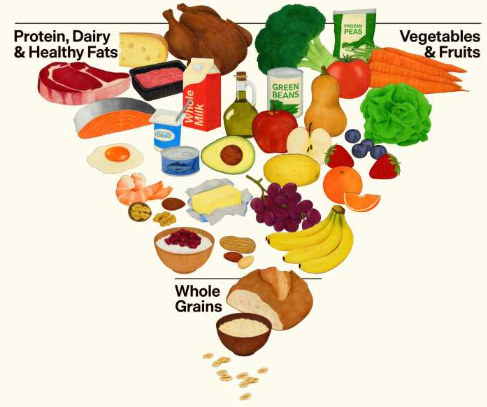
The Guidelines recommend the following:
Processed Foods:
- Limit highly processed, packaged, and ready-to-eat foods that include added sugars, and artificial additives
Added Sugar:
- It is recommended to consume no more than 10 grams of added sugars per meal
Protein:
- Prioritize high-quality, nutrient-dense protein foods as part of a healthy dietary pattern
- Recommendations have increased to 1.2 to 1.6 g/kg of body weight per day
Full Fat Dairy:
- Consume full fat dairy with no added sugars
- Recommendations are 3 servings per day
Healthy Fats:
- Include healthy fats from whole foods such as meats, poultry, eggs, omega 3-rich seafood, nuts, avocado
- Saturated fat consumption should not exceed 10% of total daily calories
Fruits and Vegetables:
- Eat a variety and focus on whole food in their original form
- The recommendation for vegetables is 3 servings per day and fruit is 2 servings per day
Whole Grains:
- Prioritize fiber-rich whole grains while reducing highly processed, refined carbohydrates, such as white bread, ready-to-eat or packaged breakfast options, flour tortillas, and crackers
- The serving goals is 2-4 servings per day, adjusting as needed based on individual caloric requirements
Sodium:
- Highly processed foods that are high in sodium should be avoided
- Consumed less than 2,300 mg per day
Portion Size:
- Pay attention to portion sizes, particularly for foods and beverages higher in calories
- Determine your right amount of calories needed based on your age, sex, height, weight, and physical activity level
Hydration:
- Choose water and unsweetened beverages to support hydration
In addition, the Guidelines offer specialized advice for infants, children, adolescents, pregnant and lactating women, older adults, individuals managing chronic disease, as well as those following vegetarian or vegan diets, to support nutritional needs at every stage of life.
The Blueprint for Federal Food Programs
In addition to providing guidance for public health, the Dietary Guidelines governs critical areas such as Federal Food Programs, including the National School Lunch Program (NSLP), WIC, and SNAP. Recent updates may prompt changes to the NSLP regulations. Gordon Food Service is committed to being your partner by providing timely updates, solutions, and resources as you navigate these developments.