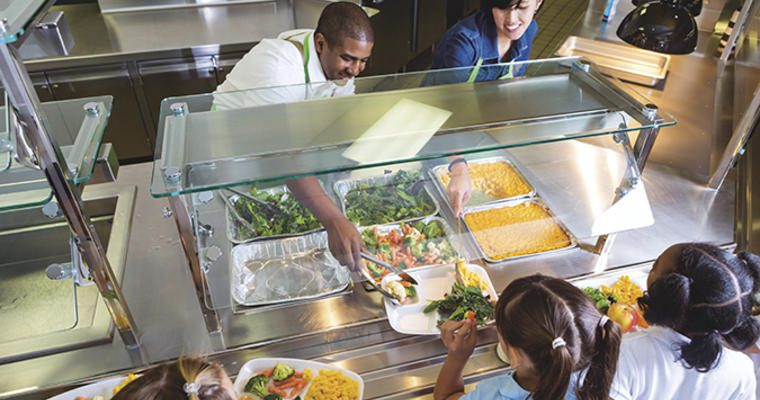
For students, a great breakfast or lunch makes for a great day. That puts a lot of pressure on school foodservice directors, who need to give students the best nutrition choices.
That makes it important to consider effective procurement practices. Everything from placing bids, understanding your menu, delivery of products, kitchen capabilities, and proper data analysis play a role in making every food purchase count.
It all starts with the bid
Negotiating the best price requires understanding your food needs, your budget, and how your bid fits applicable laws and regulations, says Stacy Sagowitz, President and Owner of Food Safety Systems. As a former school foodservice director, foodservice broker, K-12 sales manager, and vendor representative, she has dealt with all sides of procurement.
“Everything goes through the federal government’s 2CFR, Section 210—it says anyone receiving federal dollars will follow federal procurement law,” she says.
But federal laws are just the start. Each state has agencies that monitor child nutrition, so state agencies also have procurement rules. In some cases, counties, municipalities, and even school districts themselves have rules to follow.
“There are 14,000 school districts in the U.S., and all have different limits,” Sagowitz says. “It’s vital to know the rules of the arena you’re playing in.”
Ultimately, all procurements must be competitive. This lets schools bid for exactly the products and services they need.
“If you want a certain brand of butter or a certain style of breaded chicken nugget, make sure it’s written right into your bid—just make sure you have a way of documenting the brands you have selected,” Sagowitz says.
Take the menu into consideration
A cycle menu can outline specific foods and even reduce the number of SKUs you buy. Maureen Pisanick, President and Chief Nutrition Officer at Pisanick Partners, reminds foodservice directors that despite some repetition, cycle menus allow plenty of creativity.
Young people enjoy fast-food restaurants, which use a cycle menu that employs the same burger patty for a dozen menu offerings. The fast-food model shows how a single SKU can simplify your bid. Using one SKU—cooked chicken pieces—several different ways won’t compromise creativity or limit options.
Gordon Food Service Education Segment Specialist Cindy Condon says limiting SKUs also allows the distributor to acquire items in larger volume, which results in better pricing and easier tracking and inventory management.
Carl Hopp, a Gordon Food Service Education Segment Manager, agrees. Having multiple similar products creates a bigger chance that products will be used incorrectly, which can affect inventory and the ability to meet nutrition requirements.
“You don’t see a chain restaurant making new menus weekly,” Hopp says. “Limiting products and using cycle menus allow schools to fully utilize products.”
So, which products should I buy?
To place a bid that calls for a specific brand or product—such as burgers made by a particular manufacturer—a thorough screening is necessary.
“The school must conduct research and document the methodology for determining a brand,” Sagowitz says. “You must be able to write in your bid, ‘We intend to buy a 100 percent beef patty, and we’ve tested these products and they have the ingredients and nutritionals we need.’”
Screening also helps discover new products, preparation methods, or alternatives to products that undergo manufacturing or ingredient changes, Hopp says. It also reveals cross-utilization opportunities.
“A chicken nugget can be used as a stand-alone entrée, or it can be cut up and added to a wrap or sandwich, put in a salad, or used in a chicken mashed potato bowl,” Hopp says.
Consider your capabilities and know your data
When building bids and placing orders, communicate with the distributor and your program will run like it’s on autopilot. Each school has different storage and delivery needs, and each kitchen has different equipment and serving capacities, all of which affect pricing.
“Handling product costs money for the distributor, so it’s critical to know your capacity,” Sagowitz says, advising schools to factor in how their needs affect deliveries. “How much freezer space do you have? Does the food need to be stacked or taken upstairs? Is there a certain time of day or week you need deliveries?”
Using data is more important than ever, now that more and more districts cannot roll over planned assistance level (PAL) dollars year after year. POS systems and other technology data track information that help manage menus, control capacity, and reduce waste—all factors in making the most of your bid dollar.
“Front-of-house systems track meal counts and sales information; back-of-house systems monitor inventory, production, and historical usage,” Condon says. “This information is valuable to the food and nutrition department.”
Different measurements can help calculate sales and revenue, forecasting, ordering, inventory record-keeping, tracking food waste, and it can even provide visibility into student participation for each menu item.