In the foodservice industry, “safety” often feels like a box we check to pass a health inspection. But let’s be real: food safety is about much more than compliance. It is about business survival, and more importantly, it is about saving lives.
The stakes couldn’t be higher. An estimated 48 million people contract foodborne illnesses every single year resulting in an estimated 128,000 hospitalizations and 3,000 deaths according to the FDA. Plus, the financial impact on a business is staggering. A single foodborne illness outbreak or mishandling a customer’s dietary needs can cost a restaurant anywhere between roughly $6,000 and $2.2 million. One restaurant chain had to pay $200K to a minor and her family after a Massachusetts jury found them negligent and awarded damages.
Many of us learned to cook in home kitchens where scientific rigor wasn’t the priority; bringing those habits into a commercial environment can be disastrous. Whether you’re a seasoned executive chef or a new front-of-house manager, it’s your responsibility to debunk persistent myths, master technical protocols, and handle guest interactions with empathy and precision. With patience & training, food safety missteps can be avoided.
TCS Foods and The Temperature Danger Zone
Myths are dangerous because, on the surface, they often “feel” true. The FDA Food Code provides specific standards that prevent bacterial proliferation. Let’s correct the record on the most common misconceptions.
| MYTH | FACT |
| The “Sniff Test” is Reliable | You cannot identify unsafe food by sight, smell, or taste. Pathogenic bacteria—the kind that makes people sick—often produce no odor or visible signs of spoilage. |
| Freezing is a Cure-All | Freezing slows bacterial growth; it does not stop it completely. Once food thaws, bacteria can wake up and multiply. To make food safe, it must be cooked to the proper internal temperature. |
| Thawing on the Counter is Safe | Food shouldn’t be defrosted at room temperature because it spends too much time in the “Temperature Danger Zone,” where bacteria thrive. |
| Visual Checks Determine Doneness | Visual cues like “brown meat” or “clear juices” are not scientific indicators of safety. The only way to ensure safety is by using a calibrated thermometer to check internal temperature. |
| Washing Meat is Necessary | Washing meat isn’t cleaning it. Splashing water spreads bacteria onto your sink, countertops, and nearby surfaces, increasing the risk of cross-contamination. The heat of the cooking process is what cleans meat. |
Mastering the Temperature Danger Zone
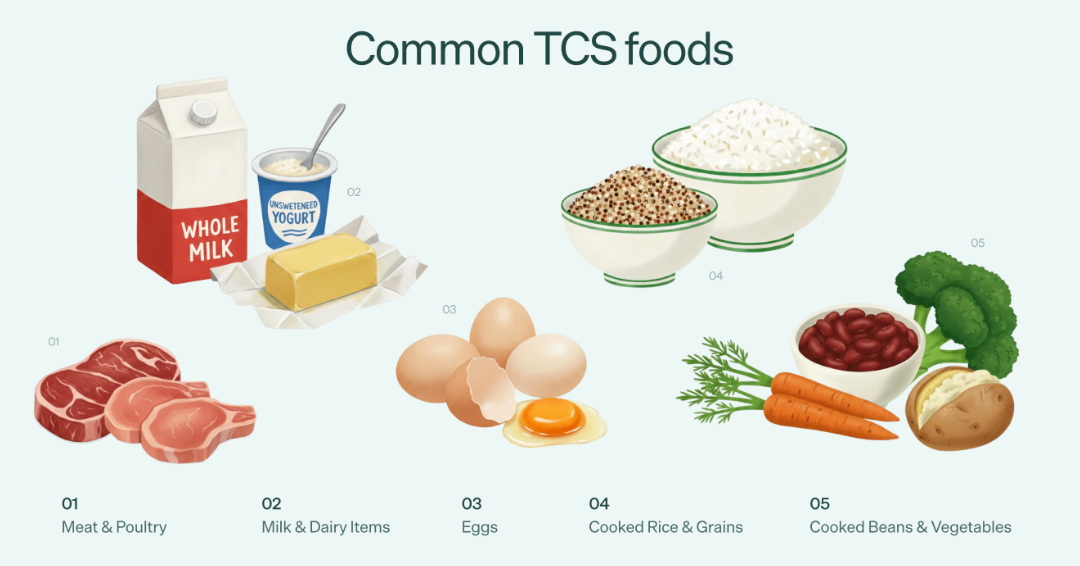
The “Temperature Danger Zone” is the range between 41°F and 135°F. In this window, bacteria grow rapidly. Keeping Time and Temperature Control for Safety (TCS) foods—like eggs, dairy, meat, and cooked rice—out of this zone is critical.
Thawing Food Safely
Many people believe that frozen food can be pulled out and set on the counter to defrost. However – food should NEVER be defrosted at room temperature because the risk of entering the temperature danger zone is extremely high. Your team should utilize one of three approved methods for thawing:
- In the Refrigerator: This requires planning (approx. 24 hours per 5lbs).
- Submerged in Cold Water: The water must be running or changed every 30 minutes, and the food must be in a leak-proof bag.
- In the Microwave: Only if the food will be cooked immediately afterward.
Heating & Reheating Food Safely
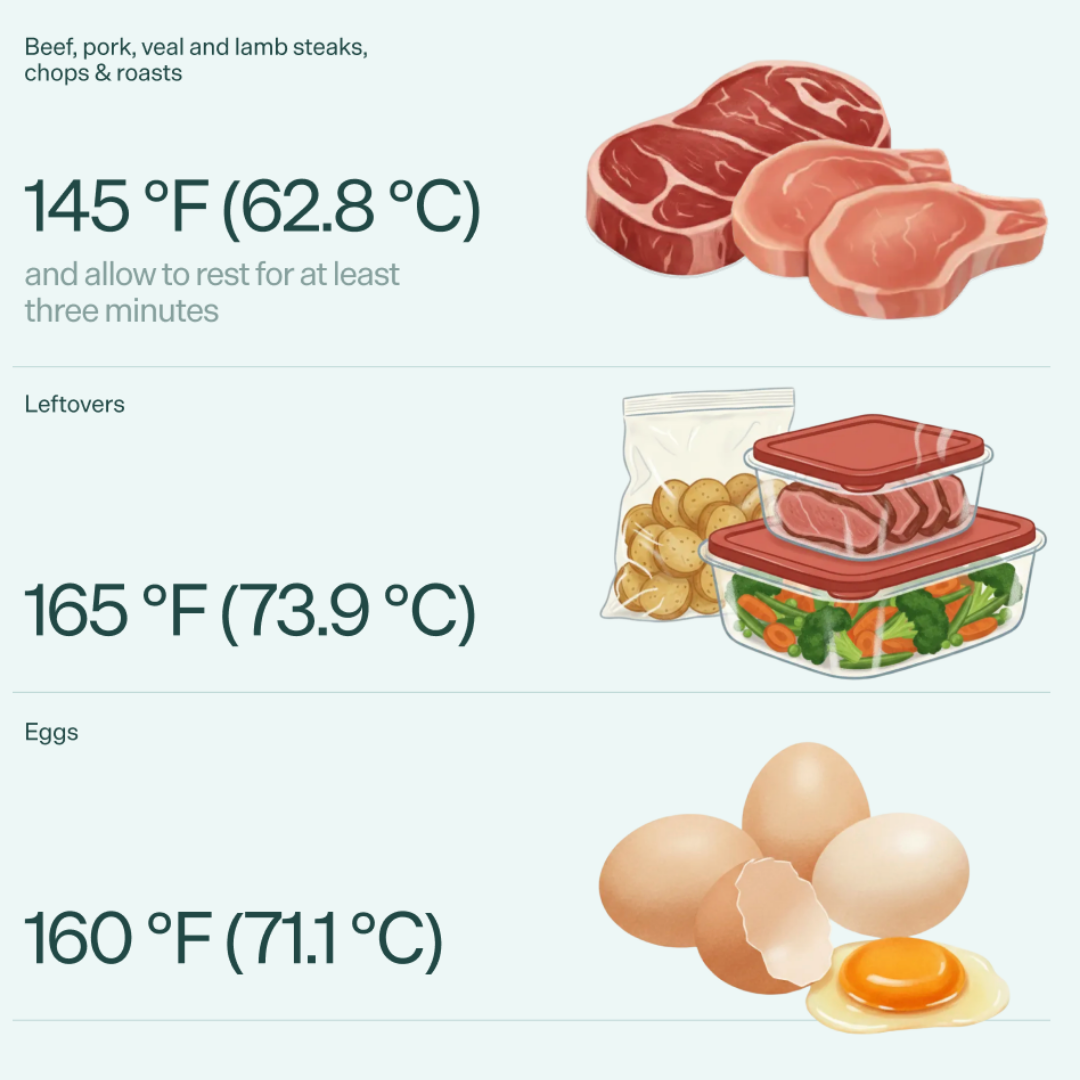
Many TCS foods have specific internal temperature cooking requirements – promptly heating or reheating food to the correct internal temperature kills pathogens and quickly moves them through the temperature danger zone.
Cooling Hot Food Safely
Putting hot food in the fridge isn’t always enough to cool it appropriately. You must follow the FDA’s two-stage cooling process to move food through the danger zone quickly enough:
- Stage 1: Cool food from 135°F to 70°F within two hours.
- Stage 2: Cool food from 70°F to 41°F within the next four hours.
If you don’t hit 70°F in two hours, you must reheat and start over or discard the food. Tips for faster cooling include using ice water baths or separating large batches into smaller, shallow containers.
Handwashing: The First Line of Defense
It sounds basic, but “washing hands” is often done incorrectly. When it comes to food safety, hand hygiene plays a crucial role. When hands go unwashed, a few things can happen:
- Unwanted flavors and odors can be introduced into food
- More than 200 diseases can be transmitted; pathogenic microorganisms pick up free rides to their next victim on contaminated hands
- Failing to meet standards results in fines, business loss, and reputation damage
The standard requires wetting hands, applying soap, and scrubbing for at least 15 seconds before rinsing and drying. Staff must be trained to wash hands at critical transition points:
- Before putting on gloves
- After handling money/credit cards, raw meat, food waste, or garbage
- After touching their face, hair, or phone
- Returning to work after eating, drinking, smoking, or using the bathroom
Distinguishing Allergies, Intolerances, and Preferences
Building trust with guests starts with understanding their medical needs. While allergens can be life threatening, intolerances and food preferences should be handled with equal care.
- Food Allergy: An immune system reaction affecting multiple organs. It can be life-threatening (anaphylaxis).
- Food Intolerance: A digestive system issue (like lactose intolerance) caused by an enzyme deficiency. It causes discomfort but is rarely life-threatening.
- Food Preference: A lifestyle choice based on religion, values, or taste (e.g., vegan, kosher, keto).
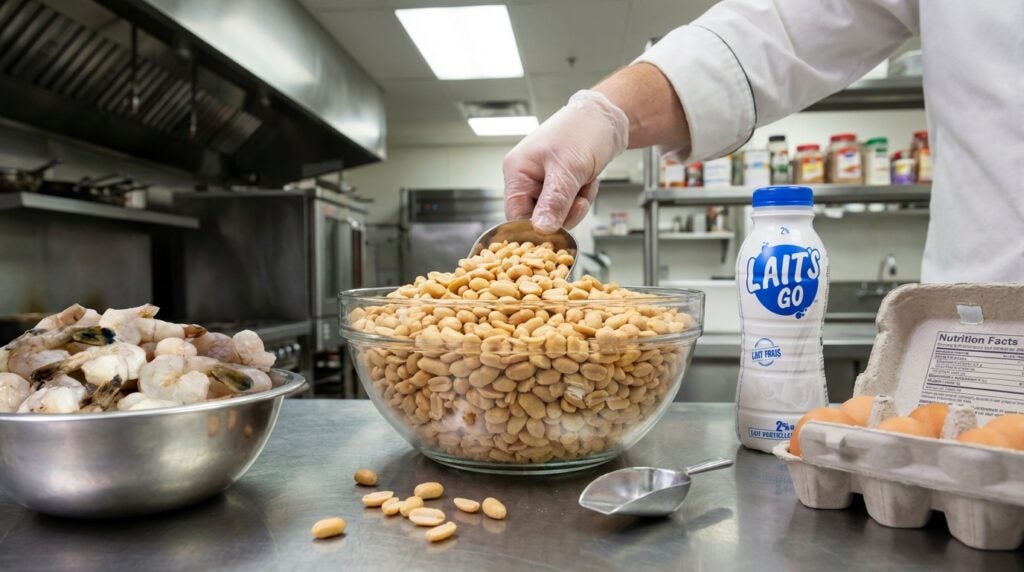
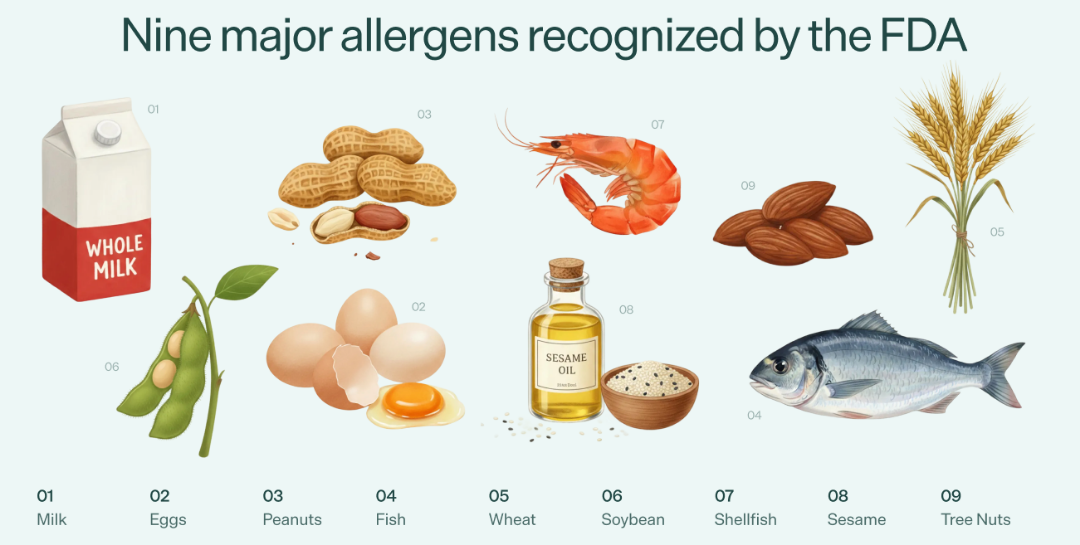
While the medical stakes differ, your team’s commitment to accommodation should remain consistent. Many food service workers are undereducated on food allergies; but because allergies can be life-or-death and your restaurant’s reputation might be at stake, it’s important to stay on top of it. According to the 2022 FDA Food code, managers and persons-in-charge must be able to demonstrate knowledge of the major 9 allergens and ensure that staff is properly trained as it relates to their role. It’s a great idea to have your staff memorize the big 9 major allergens which account for the majority of reactions:
Front-of-House Strategy: Communication and Crisis Management
You can have the safest kitchen in the world, but if the front-of-house (FOH) cannot communicate effectively with the guest to identify potential issues, you are still at risk. Leadership means creating a culture where asking for help is normalized. If a line cook isn’t sure if a knife was used on peanuts, they should feel safe stopping the line to ask, rather than guessing and risking a life. Here’s some immediate actions you can take to train your staff and make handling allergies, intolerances, and preferences a breeze.
Proactive Scripting: Don’t wait for the guest to speak up. Train your servers to use these specific scripts to normalize safety conversations:
- The Greeting: “Are there any allergies, intolerances, or food preferences I should know about?”
- The Service: “I confirmed with the kitchen that this was prepared away from [allergen]. Does everything look and taste right to you?”
The C.A.L.M. Framework: When a guest is unhappy or concerned about an allergen, emotions can run high. Using the C.A.L.M. Framework helps staff de-escalate the situation:
- Connect: Show empathy without assigning blame. “I hear what you are saying.”
- Assess: Ask open-ended questions. “Can you tell me what you were expecting with this dish?”
- Lead: Set polite boundaries and offer solutions. “I can have the kitchen remake this or bring the menu to choose another option—which would you prefer?”
- Move Forward: Confirm the solution and thank the guest. “I’ll check back shortly to make sure everything is right.”.
Emergency Response: Despite our best efforts, emergencies happen. If a guest shows signs of an allergic reaction (anaphylaxis), your team must act instantly:
- Ask if they have an epinephrine auto-injector (EpiPen).
- Call 911 immediately.
- Inject the EpiPen into the outer thigh and hold for 3 seconds (if permitted by policy/law to assist).
- Stay with the customer and keep them lying down until help arrives.
How Gordon Food Service & Trust20 Can Help
Food safety is a combination of technical precision—like calibrating thermometers and cooling times—and soft skills, like empathetic communication and clear leadership.
Don’t wait for a negative health inspection or a scary allergic reaction. Utilizing accredited training programs, such as Food Handler or Allergen Awareness courses, ensures your team is confident, compliant, and ready to serve safely. By moving beyond the basics, you protect your guests, your reputation, and your bottom line. Reach out to your Gordon Food Service Sales Representative and Trust20 for assistance in:
- Food Handler Certificate Training
- Food Allergy Certificate Training
- Manager Training & Certification
- Alcohol Service Training