
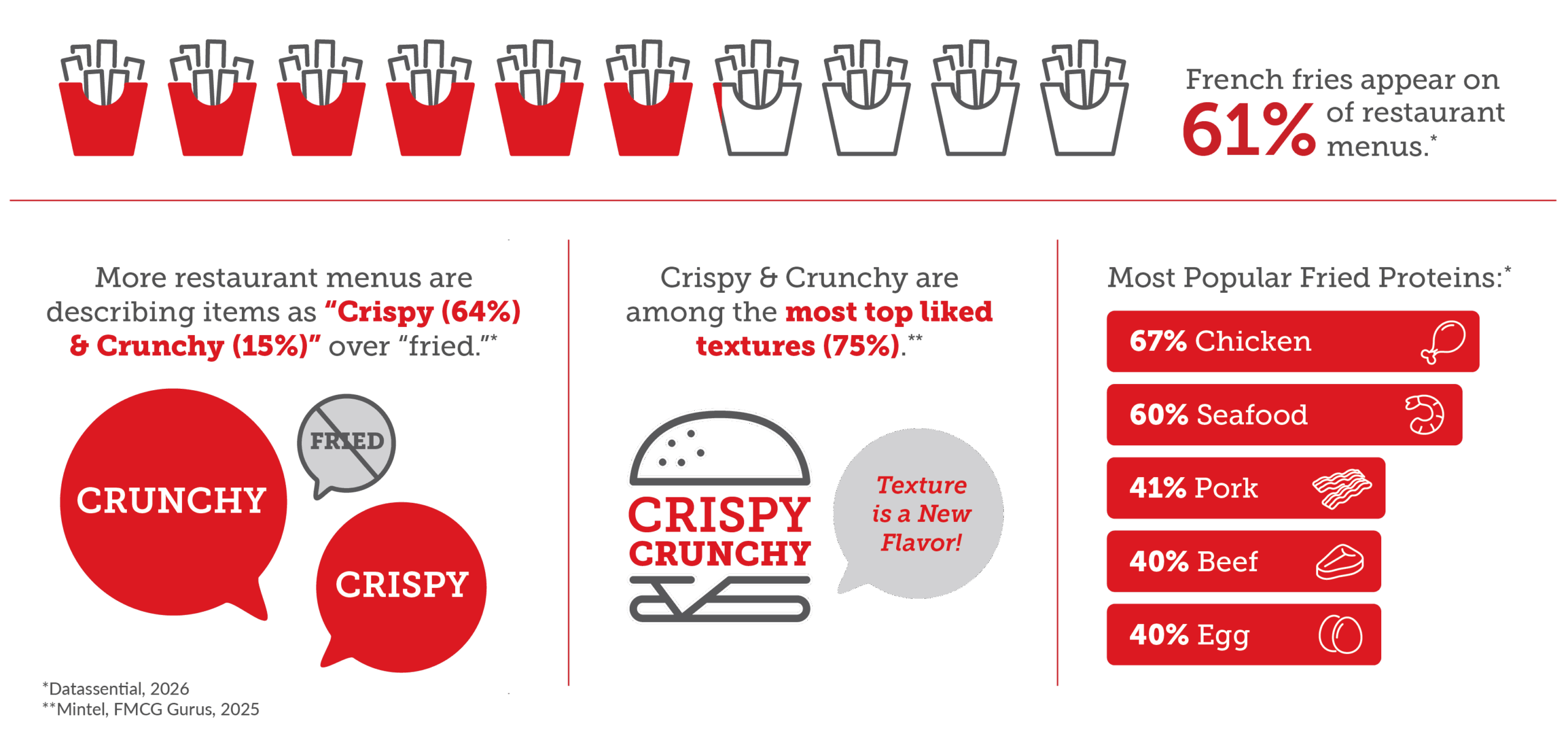
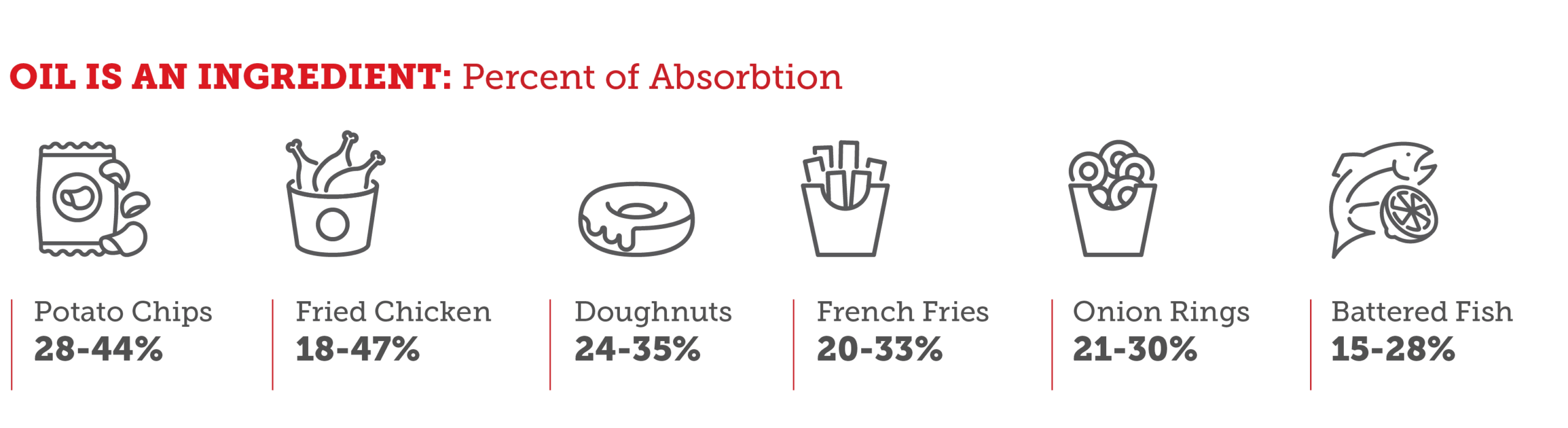
Oil is one of the most important ingredients in your crispy menu options – it affects the color, texture, and flavor of food. That’s why it is imperative that you choose the right one to fit your operations.

When choosing a frying oil, there are a few questions you need to ask:
- Oil & Oil Blends: What blends are available to achieve the most preferable characteristics such as mild flavors, longer oil life, and extended crispiness after leaving the fryer?
- Relative Fry Life/Oil Breakdown Time: All oils break down. How long before oil breakdown begins? Once it starts, how quickly will I need to replace it?
- Flavor Profile: What does the oil taste like, and how does that affect the taste of my food?
- Nutrition Profile & Claims: Do you have any specific nutrition goals or claims you’re looking to make?
- Cost: How much is it going to cost me to use different kinds of oil in my fryer?
Oil, Oil Blends, and Flavor Profiles
Frying food with different types of oils has different effects on your food. Common types of oil include Corn, Canola, Peanut, Soy, and Sunflower, and each oil has its own list of benefits. It is important to consider the flavor of the oil you are using when deciding which kind of fry oil to use for various crispy foods.
Fry Life and Oil Breakdown
One of the most important things to consider when choosing an oil is how often you need to change it – but keep in mind that how you use and take care of your fry oil can affect its fry life too. Even though premium oils are highly stable, there are factors that will contribute to a shortened life. We like to use the acronym HAMSS to remember some of these factors:
- Heat – monitor the heat level in your fryer. Heat is needed to cook, but if it’s too hot, your oils will break down too quickly.
- Air – cover your fryers during slow hours and at night to reduce its contact with air.
- Moisture – everything you cook contains moisture – particularly proteins like chicken. Load your fry baskets away from the fryer especially when food is frozen.
- Salt – salt breaks down in oil and can cause foaming. Drain brined items well before frying, and add salt after frying instead of before.
- Soap – use only cleaning agents that your fryer manufacturer recommends. Soaps and detergents break down oil.
Other things that can affect oil life include carbon buildup, which looks like cakey black grease spots in your fryer, and poor oil maintenance. Filtering your oil regularly and using a skimmer to capture stray particles helps prevent both carbon build-up and flavor transfer.
| Oil Type | Flavor Profile | Relative Fry Life |
| Soybean Oil | Bland/Buttery | ⬤ |
| Canola Oil | Neutral | ⬤ |
| Corn Oil | Sweet | ⬤◖ |
| Soy/Cottonseed Blend | Slightly Buttery | ⬤⬤ |
| Cottonseed Oil | Neutral | ⬤⬤⬤ |
| Peanut Oil | Nutty | ⬤⬤⬤◖ |
| Lard Cube | Neutral | ⬤⬤⬤◖ |
| Gordon Signature Simpli-Fry Clean Frying Oil | Neutral & Sweet | ⬤⬤⬤⬤ |
| Gordon Signature High Oleic Canola Oil | Neutral | ⬤⬤⬤⬤⬤ |
| Gordon Signature SunFry Sunflower Oil | Neutral/Mild Nutty | ⬤⬤⬤⬤⬤ |
| Tallow Cube | Beefy | ⬤⬤⬤⬤⬤ |
So, What Oil Should You Choose?
Ultimately, the best oil choice depends on your operation’s priorities. While traditional soybean and canola oils can be a cost-effective option, many operators choose more stable oils—such as high oleic canola, sunflower, or oil blends—to help improve frying performance and consistency.
More stable oils can help food maintain its appearance, flavor, and texture throughout the day while delivering
more consistent results from batch to batch. They also tend to last longer in the fryer, reducing the frequency of oil changes and the labor associated with handling and filtering oil. With less oil discarded, operators may also reduce disposal costs and waste.
An important thing to consider when choosing what oil is how much it costs over time. For example, a High oleic canola oil can help reduce the number of changes you need and the number of cases per fryer vat.
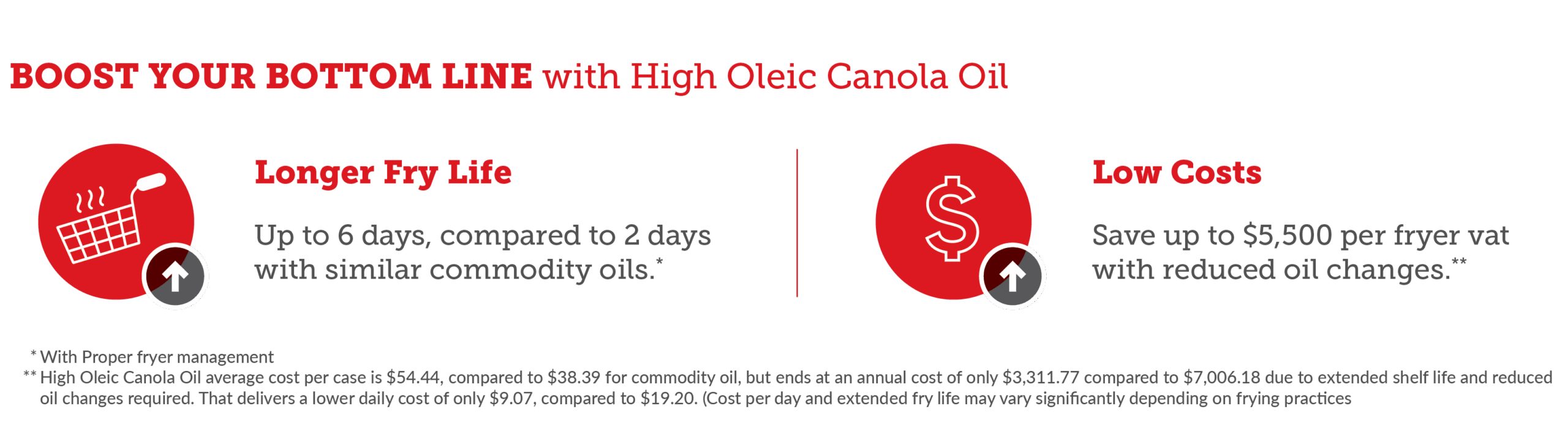
These operational benefits can have a meaningful impact on profitability by helping reduce oil consumption,
improve labor efficiency, and deliver a more consistent eating experience that keeps customers coming back.
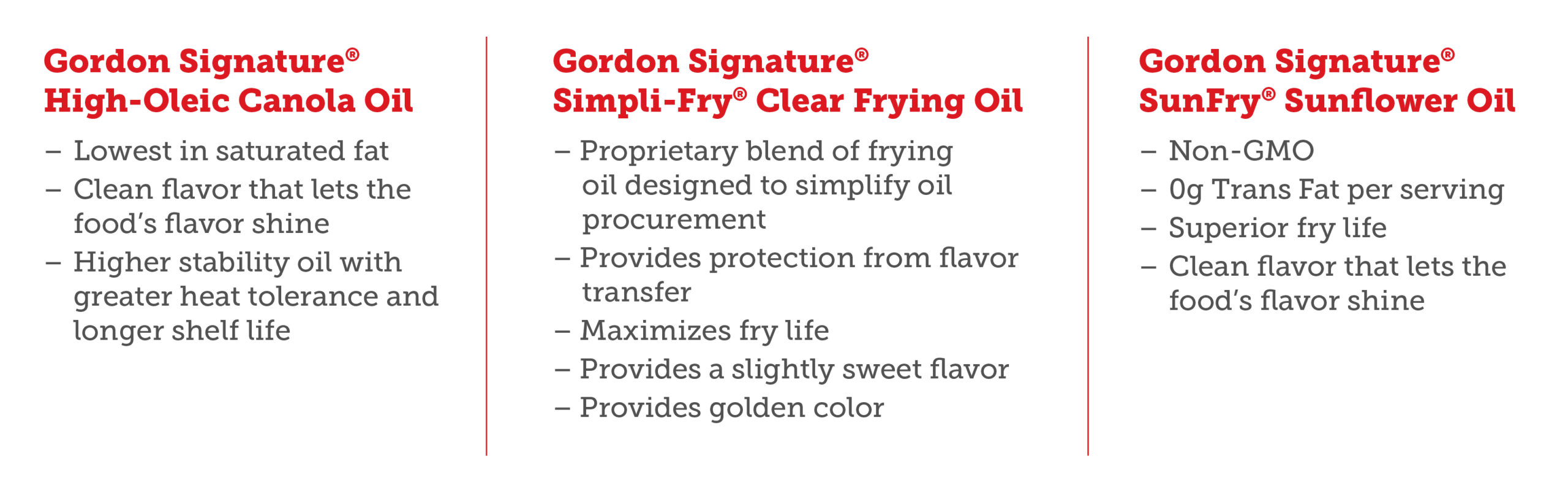
Below, are three popular oil options and their key characteristics to help you determine which solution is right for your operation.